Children's symbol of love for their mothers and a delicious herb









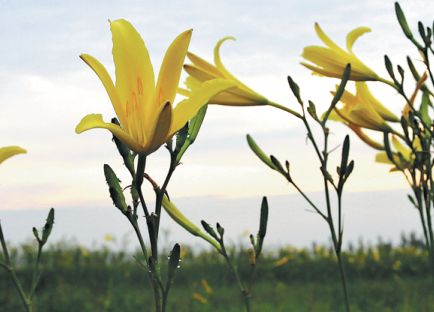
Day lily, a popular food ingredient in China, is a native herb with a long history and rich cultural connotations.
Li Xueru, a food culture researcher in Shanxi province, said the Book of Songs, or Shijing, a collection of poems compiled by Confucius more than 2,500 years ago, mentioned this herb by calling it worry-free grass.
"Legends have it that when a son is about to leave his mother for a long journey, he would usually plant the herb in the courtyard, hoping to relieve the mother's worries about him when seeing its beautiful blossoms," Li said.
He added that as the herb is a symbol of children's love to their mothers, it frequently features in poems and paintings.
Zhu Peiquan, a painter in Datong, said the reason why the herb was usually seen in paintings is related to a tradition starting from the Jin Dynasty (265-420).
"About 1,700 years ago, women liked to wear ornaments made of day lily flowers because they believed the herb would give them more opportunities to conceive children," Zhu said.
Day lily is also popular in gardening.
Since the 1930s, Western horticulturists have cultivated thousands of varieties based on the original species in China and neighboring countries.
"However, the herb is mostly known to modern Chinese people as a food ingredient," said Li, the food culture researcher.
He said there are some scientific reasons why this herb is called worry-free grass.
"For more than 2,000 years, people have used the herb's flower as a food ingredient," Li said.
"However, according to an encyclopedia compiled 1,700 years ago, the flower is slightly toxic, rendering the eaters some exhilarating illusions," Li said.
The researcher noted that the toxin is removed in the drying process, so it is recommended to use dried instead of fresh flowers as a food ingredient.
According to An Yiping, an official responsible for the day lily industry in Yunzhou district, Datong city in Shanxi province, the day lily in Datong has fewer toxins compared to varieties in other regions after hundreds of years of cultivation.
"Datong has a history of more than 600 years in growing day lily. It is now the largest producer of the herb in Shanxi province," An said.
Li Yali contributed to this story.