China, from good student to wise teacher









As the country has sped along the path of rapid growth and better living standards, it has learned much from others, and now many can learn from it
Editor's note: As China aims to eliminate extreme poverty and be a "moderately prosperous society" (xiaokang shehui) in time for the 100th anniversary of the founding of the Communist Party of China next year, we talk to leading experts for their take on the country's commitment.
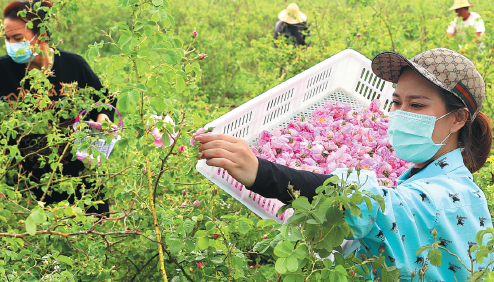
Impoverished rural areas of China made a distinct impression on the British Sinologist Kerry Brown when he lived in Inner Mongolia between 1994 and 1996. He recalls vividly traveling to stay on a simple farm on a number of occasions and sleeping on a brick kang (bed stove) and being awoken by pigs grunting or cockerels calling out.
"You could see that people's living conditions were tough-limited sanitation, often unpredictable electricity supply and pretty backbreaking lives. And there was a desire to move forward in the 1990s, but the levels of development were very uneven and patchy."
In stark contrast to what he had witnessed in the 1990s, on a research trip to the villages of Hebei province about 10 years earlier, there were already signs of wealth and development that one usually observes in rural areas of more wealthy provinces such as Fujian or Zhejiang, he said.
"In the 1990s, one would imagine that maybe one day the Chinese countryside would be developed, but perhaps not as quickly as happened."
From 1998 to 2005 Brown served with the British Foreign and Commonwealth Office as first secretary at the British embassy in Beijing. While China's rapid economic growth over the past 40 years has been integral to how the world has developed, it is not widely recognized, he said.
The country has managed to lift more than 850 million people out of poverty since reform and opening up began in the late 1970s, with GDP growth averaging almost 10 percent a year, according to the World Bank.
"The vast majority of humanity is better off than it was 50 years ago, and a large part of that is because of the achievement from reforms in China which have made such a fundamental impact on Chinese people's lives and on the wider world," Brown said.
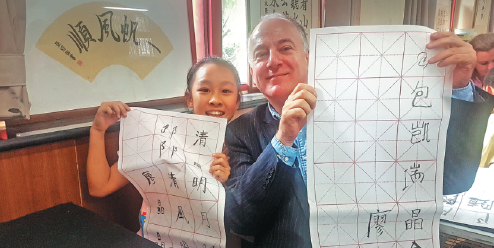
These days Brown is a professor of Chinese studies and director of the Lau China Institute at King's College London and is now working on a study of the Communist Party of China as a cultural movement.
While his main role is to try to communicate to Britain and greater Europe something about the history of China's development over the past 70 years, and in particular what has resulted from this, this has not been easy, he said.
"Knowledge levels of China are uneven, for instance, in the UK. Talking about poverty alleviation and China's achievements here is important-and from my point of view I am sincerely admiring of what China has achieved.
"For all the challenges facing the world today, people live longer, and have better standards of life than they did even a quarter of a century ago. A big part of that has been because of what has happened in China. That is something that should be understood and recognized no matter what other issues there might be."
Importance of mentality
President Xi Jinping made poverty eradication a personal mission more than 30 years ago when he was Party chief of Ningde in Fujian province.
In his book Up and Out of Poverty he sets out four important principles: avoiding a poverty mentality (if you believe you are poor, you will be); adopting development measures suitable to local conditions; the importance of strong leadership and coordination; and not wasting money on grandiose projects just because they may be popular. The element regarding mentality is important, Brown said, and in many ways feeling impoverished is almost comparative.
He cited the UK of the 1980s as an example.
"Many argued that people shouldn't feel poor because they had a basic social security net and support, and there weren't the levels of poverty seen in the developing world, in Africa or Latin America for instance.
"But some argued that in a society like Britain, just lacking a decent television, decent housing and decent cars made people feel poor. Absolute poverty in fact is simply a theory; relative poverty is the reality. And to make people feel that they live in a society where they can aspire to get out of their current situation and move into better ones is important."
In contemporary Chinese society, the opportunity to think of oneself as no longer being poor and feeling that at least something is possible, and things will get better, is crucially important, he said.
"It shows an optimistic mindset, and where there is optimism, then things are always possible. That also demands a set of government policies and attitudes that support this."
The Chinese government has been enormously successful in lifting people into greater wealth and creating a more prosperous society, he said.
In less than 40 years China has emerged from an agrarian society to become an upper-middle-income country and the world's second-largest economy. It began this period by being the manufacturing workshop of the world and now has a large service sector and one of the biggest consumer markets in the world.
Such transitions, Brown said, were achieved because China studied the outside world, including organizing study tours for government officials to places such as Japan, Singapore and the UK in the 1980s, but at the same time the government also strove to adapt to its own conditions.
"It was clear that Deng Xiaoping's instructions even then were to be open-minded about what was looked at, to take ideas that might work for China, but to never lose sight of local conditions.
"This created the very bespoke and particular Chinese development model that we have seen over the last decades, and which has been behind so much growth and stimulation."
China is unique in its own way in terms of scale, Brown said, and it has come up with a set of policies that deal with improving human development, education, health levels and the physical infrastructure in rural and peri-urban areas, allowing a combination of innovation but also central health. "This probably explains some of the flexibility of the Chinese approach, and why it worked. It wasn't a one-size-fits-all approach, but nor did it mean that everywhere went their own way."
Over the past decade, this way of development has gradually been depicted by some economists as a "China model", in which the country gained a huge amount of information and knowledge about implementing growth strategies, and making it possible for large groups of people to lift themselves from poverty since 1978.
Brown said China is now in a position not just to be a learner, but to be a teacher as well.
The idea of China as a teacher may be willingly accepted in Africa or Latin America, but the general mindset for most Europeans is that China should still be learning from the West, in areas such as technology, developing a finance sector and addressing its environmental and sustainability challenges, he said.
"It is very difficult to convey to people unfamiliar with China's conditions now that it does have a vast amount to teach, and that in many areas it is already ahead of the West. The patronizing idea that it just needs to sit and take instruction from others needs to disappear. The best position for all of us is to learn together-and China being a teacher in many areas is important."
Post COVID-19 collaboration
The Chinese government takes poverty reduction very seriously and has set itself the goal of eliminating all extreme poverty by the end of this year, a goal Brown said China is "well on track" to achieve despite the challenges posed by the impact of COVID-19.
China's record of responding to crises in the past few decades, particularly in dealing with the post-2008 global financial crisis, has been effective, he said.
"So there is a good likelihood that the central government and provincial ones have the right levers, policy options and resources to be able to get on top of the vast challenges of COVID-19 and then move beyond them."
The challenges China faces are probably not so much whether it can deal with its aim of lifting the final group of people out of absolute poverty, he said, but what sort of role it may take in the face of large-scale poverty elsewhere in the world. The World Bank estimates that up to 60 million people are likely to be pushed into extreme poverty as COVID-19 takes its toll on the world.
"This could be a moment for China to also play a role in addressing with other governments these issues through its own experience of poverty alleviation, but also through enhanced cooperation and greater efforts to work together."
While China is being seen as geopolitically ambitious and having large strategic aims, Brown said few really understand that it can play a huge role in practically addressing developmental issues in the developing world.
"That is truly win-win because it assists in creating a much more understandable image for China, (and) also aids countries that are really likely to struggle with the tough economic conditions we seem to be heading quickly into."
Milestone marked
Brown hails China's aim to be a moderately prosperous society by the end of this year as a milestone, because for the first time the world will see modernity with Chinese characteristics-the emergence of a middle-class in a country with most people working in the services sector.
"This is an important milestone because it means the world really will be dealing with a China unlike any they have dealt with before in modern history-a place where in terms of prosperity levels it will no longer be a developing or undeveloped country, but a place where many areas will be as advanced, or even more advanced, than in Europe or America."
The main issue the country will now face is how to restructure the economy through urbanization and how to improve the services sector to create good jobs for young Chinese entering the labor market each year, and to address the inequalities and imbalances within the country.
"Poverty is often relative. Today's relatively well-off people may be tomorrow's less well-off, with nothing changing for themselves, but the world around is transforming, so the constant process of ensuring that people feel their lives are going in a positive direction, and that tomorrow will be better than today, is crucial. This is not so much about poverty eradication, but about eradicating the feeling of relative poverty."
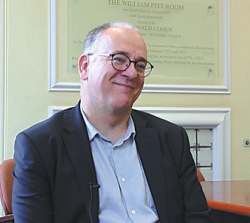
Kerry Brown is one of the leading Sinologists in the United Kingdom, specializing in Chinese history and politics.
He is the author of more than 10 books on modern Chinese politics, history and language, including: The New Emperors: Power and the Princelings in China (2014); What's Wrong with Diplomacy: The Case of the UK and China (2015); Berkshire Dictionary of Chinese Biography (in four volumes, 2014-15); China's CEO: Xi Jinping (2016); China's World: What Does China Want? (2017).
Brown, a professor of Chinese studies, currently directs the Lau China Institute at King's College London. He believes that China's changes and growth over the past 25 years have contributed substantially to the improvement of living standards worldwide.
wangmingjie@mail.chinadailyuk.com