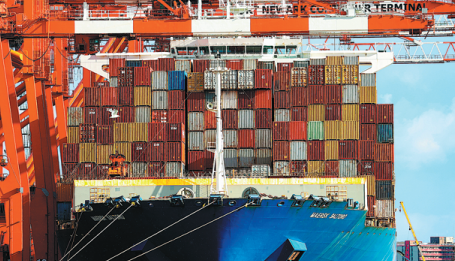
No end in sight for glitches in supply chain









Clogged ports, unfilled jobs highlight economic strains in big-spending US
The words "supply chain" have recently jumped to the fore of the national conversation in the United States.
Backlogs at ports, staff shortages, a supply-demand imbalance and other economic realities stemming from the COVID-19 pandemic have startled US consumers and politicians. Talk of a bleak Christmas holiday season with barren retail shelves and undelivered goods is growing louder.
On Sunday, US Transportation Secretary Pete Buttigieg warned that the supply chain problems will likely extend into 2022.
Buttigieg said the crunch was heightened by extraordinarily pent-up demand in the US.
"Demand is off the charts, retail sales are through the roof," he said on CNN's State of the Union program, as transportation and shipping networks have struggled to keep pace.
"We are relying on supply chains that were built generations ago. It's one of the reasons why this entire year we have been talking about and working on infrastructure and are eager to see Congress to act to get this infrastructure deal through," Buttigieg told CNN's New Day program on Wednesday, in reference to the infrastructure bill put forward by the administration of US President Joe Biden which has now been stalled in a divided Washington.
With the Christmas holiday season approaching as the US' coronavirus-battered economy rebounds, US retailers are taking unprecedented steps to try to navigate around myriad supply chain obstacles.
Biden announced on Wednesday that the Port of Los Angeles would begin 24-hour operations to ease congestion that has led to scores of cargo ships anchored off the Pacific coast waiting to unload.
Another Southern California port, Long Beach, has worked around the clock for a month. The two ports combined handle 40 percent of container traffic in the US, with the bulk of the shipments arriving from China.
Port of Long Beach Executive Director Mario Cordero, in an appearance on Fox News Live on Sunday, attributed the logjams to rising consumer demand and online sales.
"One factor is e-commerce," he said. "Americans have used e-commerce at a… 20 percent increase. So I think there's a certain aspect to this that is consumer demand, and that's one of the many factors that's causing the surge and disruptions of the supply chain. It's going to take collaboration by everybody in the supply chain."
With millions working from home amid the nearly two-year-long pandemic, the years-long drift to e-commerce has been turbocharged.
Consumer demand has grown so rapidly over the past two years, it's equal to about 50 million more people joining the economy, Jonathan Gold, vice-president of supply chain and customs policy at the National Retail Federation, told Business Insider.
"There are very few, if any, industries that could handle a ramp-up in demand like that, especially when you consider the lack of scalability in the supply chain infrastructure and manufacturing base," he said.
Economist Diane Swonk told The Washington Post: "We are opening up a global economy all at once. You're going to get problems. It is much easier to turn the lights off in a factory than turn them back on again."
German multinational financial services company Allianz's chief economic adviser Mohamed El-Erian, referring to the backlogs, told Fox News Sunday: "Things will get worse before they get better."
He added that the supply chain snags amount to "the everything shortage".
The consumer price index rose 0.4 percent in September, the US Labor Department reported last week. On a year-on-year basis, consumer prices jumped 5.4 percent, the most since January 1991. In September, gasoline prices rose 1.2 percent, a year-on-year increase of 42.1 percent. Food prices climbed 1.2 percent for the month.
Unfilled jobs and depleted workforces also have stressed businesses, with delivery times on the rise for restaurant orders.
The supply disruptions also have put political pressure on the Biden administration.
Meanwhile, Congress is grappling with passing two huge portions of Biden's domestic agenda-a $1.2 trillion infrastructure bill to upgrade roads, bridges and ports, and his even bigger Build Back Better social spending program.
The infrastructure bill has bipartisan support. But the massive package that expands the social safety net and addresses the climate crisis faces opposition from within the president's own Democratic camp as well as from Republicans.
Agencies contributed to this story.
williamhennelly@chinadailyusa.com