Popular fruits and plants to welcome Lunar New Year









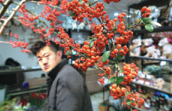
Red berry
Wang Wei, a noted poet during the Tang Dynasty (618-907), once wrote a love poem: "Red berries grow in the southern land. In spring, how many tree buds put them forth? Gather them till your hand is full, for they will make you think of me."
Though the exact species of the red berry tree that the ancient poet wrote about is still a subject of debate among botanists, the popular poem has made tree branches with red berries a hot selling item ahead of Spring Festival, as the small, red fruit helps put people in a festive mood.
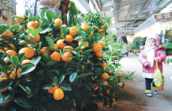
Kumquat
While strolling down streets in southern China weeks before Spring Festival, one will see entrances at big shopping malls and small shops featuring potted kumquat trees. In the Guangdong-Hong Kong-Macao Greater Bay Area, nearly every household buys these trees around this time-not to eat the fruit, but for decoration.
Kumquat has the same pronunciation as a Cantonese phrase that means "gold and fortune", so people believe the tree will bring them good luck and help them earn more money as the year progresses.
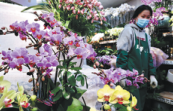
Orchid
Because of their seemingly limitless variety and colors, orchids are perennial in flower markets and shops and are sold in bouquets, pots and special flower arrangements.
Orchids are beautiful, elegant flowers and have long been seen as symbols of fertility and abundance in China. They also signify refinement, luxury and innocence. Planting techniques make them available year round, and they are considered valuable gifts.
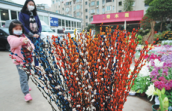
Silver willow
Its auspicious name and the buds on its branches make the silver willow a popular plant to have for Lunar New Year. Florists often cut the branches before their fluffy, silver buds sprout and paint them in different colors, often red for Spring Festival. They then bundle them together in bottles for sale.
Because of the bright colors, many people mistakenly think the silver willow-also known as the pussy willow in the West-is a plastic flower. If put in water, they will continue to sprout, but they can also be kept as dry flowers for a year.