Körber builds ecosystems to solve customers' problems









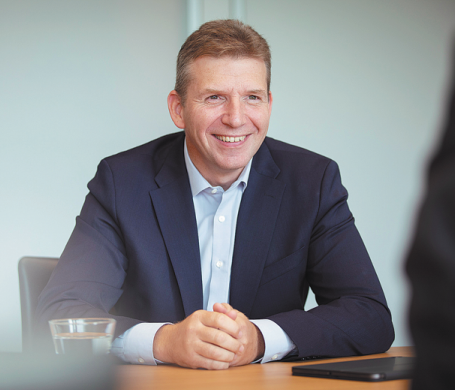
Digitization and technological improvements have changed a lot for the B2C, suppliers' industry and manufacturing sector in general. Technical advancements like automation, robotics, cloud computing, 5G and AI accelerate this trend. Producers seek partners that can support the acceleration of their transformation journey and at the same time maximize productivity. Körber, an international technology group, is such a partner. Totally, 12,000 Körber experts at more than 100 locations worldwide have one common goal: to turn entrepreneurial thinking into customer success. In the Business Areas Digital, Pharma, Supply Chain, Technologies and Tissue, Körber offers products, solutions and services that inspire. Rami Jokela, Körber's chief sales officer, provides insights on this approach.
How have customer expectations changed since the fourth industrial revolution kicked off globally?
Rami Jokela: Companies are increasingly looking for innovative ways to advance their future business in the era of industry 4.0, in which almost everything is connected, integrated, automated and steered by AI.
Nowadays, we see that the highest optimization potential for our customers no longer lies in individual products, but in a functioning ecosystem that addresses market and consumer needs end-to-end.
Shaping ecosystems is an industry trend in business-to-business. Why would you say the Körber ecosystem approach is unique?
Rami Jokela: Our customers expect a holistic solution approach instead of an individual machine, process or software focus.
We think in exactly the same way. This is why we build ecosystems as dynamic and largely independent sets of players that complement each other to create interconnected offerings which achieve more value than single solutions.
How do we do this? We aim to maximize the additional value we create for our customers by integrating all components of their production and supply chain into the market.
This includes collaboration across our fields of expertise as well as including external partners. Building valuable ecosystems means integration without compromise for us — no matter whether something is a Körber solution or a partner offering.
How do we know the correct way to do this? Körber is one of the global leading companies in both manufacturing and supply chain technologies, and one of the largest software companies in our industry sectors.
How does or could Körber support businesses in China?
Rami Jokela: We have a strong global footprint combined with proven local expertise. All our Business Areas are active in China.
Our local teams have a deep knowledge of consumer trends, market developments, and local specifics. I personally worked more than eight years in China and know the challenges of and the opportunities for multinational or state-owned corporations and other Chinese companies — also regarding their global growth ambitions.
With this background and based on our strong entrepreneurial approach, we would start most ecosystem projects with C-level talks on pain points and desired gains, such as increasing the overall equipment effectiveness, implementing digitally empowered factory performance transparency or enhancing productivity with integrated end-to-end solutions.
After this, we jointly deep dive in a workshop to concretely define a clear roadmap. Starting from this, we develop an approach to increase — for instance production efficiency with AI solutions.
Meet Rami Jokela virtually in the Körber Xperience: www.xperience.koerber.com Get additional information on www.koerber.com