Keeping the lights on









For nearly a century, Hong Kong's iconic neon signs illuminated the night, contributing to the vibrancy of the cityscape after dark. An obsession of both local and visiting photographers, the signs were also a major source of inspiration for legendary director Wong Kar-wai, who used neon lighting to convey the mood of urban Hong Kong in many of his films.
Since the 2010s, many of the city's neon signs have been removed under tighter government regulations. Neon lights also represent outdated technology, wasting far more energy than modern LED signs. As a result, Hong Kong has seen a drastic decline in neon signage in recent years. Before too long, it may only be possible to enjoy the city's neon lights by watching old movies.
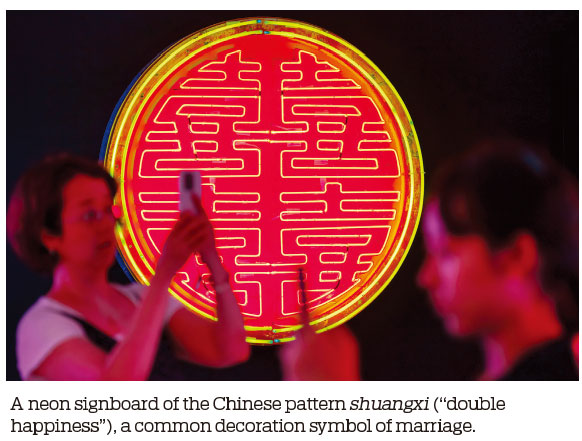
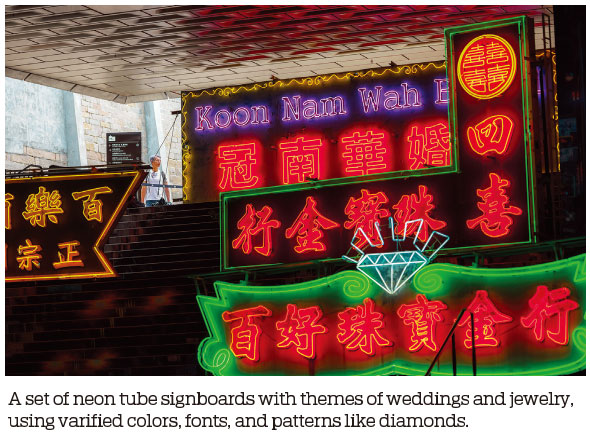
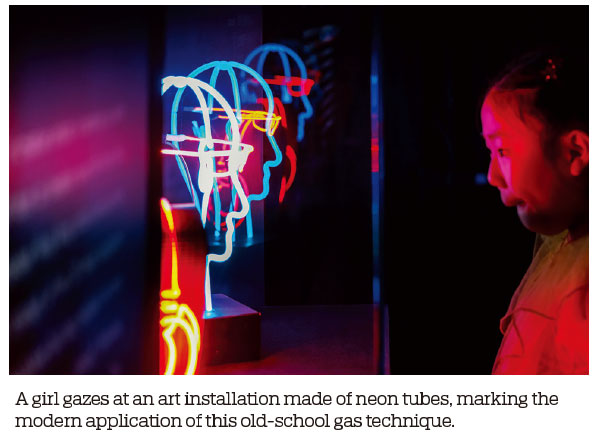
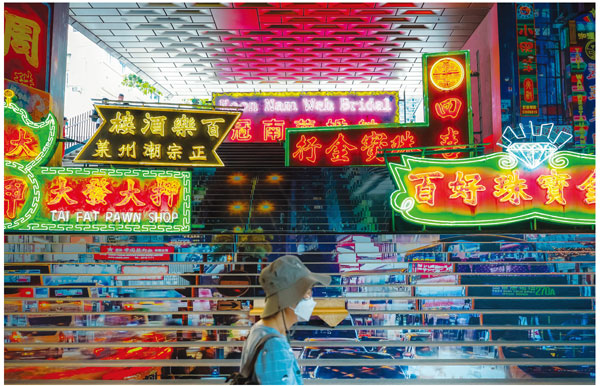
Now, Tai Kwun has collaborated with local NGO Tetra Neon Exchange to stage the exhibition Vital Signs, showcasing more than 20 neon signs of varying ages. As an art form, neon craftsmanship embodies the Hong Kong spirit of perseverance, and represents the city's unique visual identity. Through September 3, the show is not only a must-see for fans of Hong Kong history and culture, but should appeal to anyone who loves beautiful things.
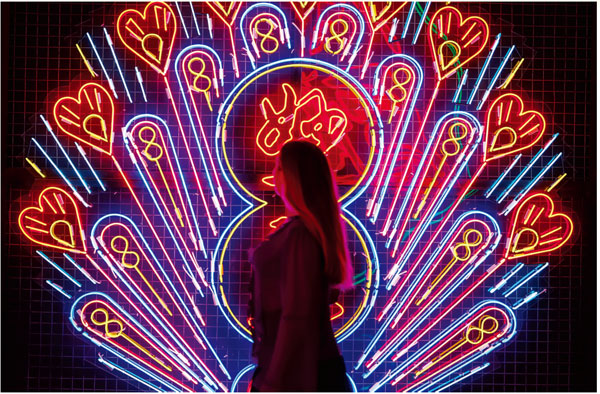
A visitor walks past the peacock-inspired neon tube signboard of Millie’s Centre, which used to glitter at the corner of Nathan Road and Jordan Road in Kowloon.
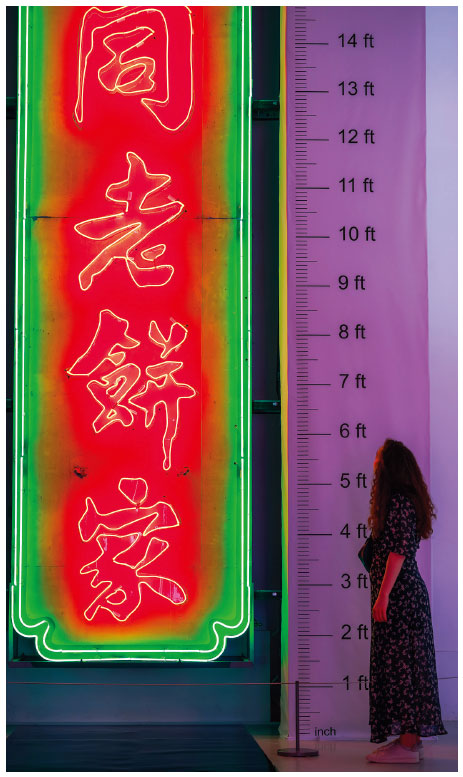
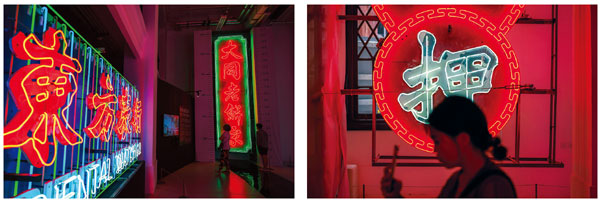
Large neon tube signboards of Oriental Watch Company and Tai Tung Bakery are on display. The Oriental Watch Company’s font is square and elegant, with English translations. Its Des Voeux Road Central branch’s neon signboard was preserved by Tetra Neon Exchange to protect Hong Kong’s cultural heritage.
A visitor takes photos in front of the distinctive neon tube signboard of Nam Cheong Pawn Shop, which is shaped like a bat holding money. The sign is a symbol of the pawnbroking industry’s glory days and is attached to a pre-war Grade III historical building in Sham Shui Po.