Resurgent qipao bridges time, heritage in New York









Iconic Chinese dress offers wearers a chance to tap into the proud traditions of the past, Li Mingmei reports in New York
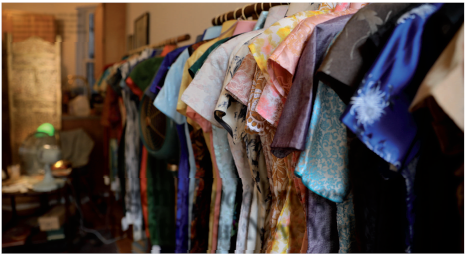
Once stored in faded blue paper boxes for almost 60 years and tucked away on a tall cabinet, the vibrant, ready-to-wear garments are now elegantly displayed on a meticulously organized shelf.
A remarkable collection of dresses known as qipao, or cheongsam, from Hong Kong Special Administrative Region, many from the 1950s or 1960s, have spanned time and space and been given new vitality in the United States metropolis New York City.
Each piece has undergone meticulous retouching, careful folding and thoughtful sorting. The silky dresses now reside at a vintage qipao studio in Manhattan's West Village.
Guo Haichen, 22, who uses the name Heather, opened Xiangjiang Vintage earlier this year.
She sees herself as not only a seller, but the proprietor of a transfer station, weaving the past and the present, filling the gaps, and bridging beautiful traditional clothes to their new owners.
"We will not make any modifications or alterations to our qipao," said Guo. "The qipao represents women's wisdom and accumulation of time; they are truly perfect."
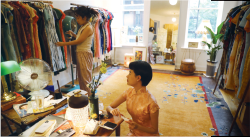
Guo's studio is a captivating artwork itself, adorned with her vintage collections, including antique carpets, old Hong Kong cigarette posters, rattan lounge chairs, and an old desk lamp. However, the true show-stoppers are the Hong Kong-style qipao.
Guo went back to Hangzhou in East China's Zhejiang province in the summer to look for fabrics for qipao. Typical qipao fabrics include silk, brocade, gambiered canton gauze, velvet, and cotton. The average price of vintage qipao in her store is $300, which mainly depends on the qipao's fabrics. For vintage qipao, the prices vary according to the price she paid for the dresses.
Guo is preparing to start manufacturing qipao using old techniques, so she can also offer her customers brand-new dresses and custom-made dresses. "I wore qipao out as an everyday dress," Guo said. "I wanted to exhibit our Chinese traditional dresses that have lasted for a long time."
High-society classic
The qipao is an example of timeless Chinese traditional clothing, with origins rooted in the ethnic attire of the Manchus, who once ruled during the Qing Dynasty (1644-1911).
During the 1920s and 1930s, the qipao became widely popular among high-society women in Shanghai, which was then, as now, a cosmopolitan city and fashion hub.
The word qipao has come to epitomize elegance, modernity, and the art of accentuating women's curves with its body-hugging silhouette, high collar, and side slits.
Over the years and across different regions in China, the design of qipao continued to evolve. In the 1950s and 1960s, as HKSAR developed into a bustling international metropolis and embraced globalization, the qipao extended far beyond China's border. It captured the hearts of overseas Chinese communities and fashion enthusiasts worldwide, becoming an iconic representation of traditional Chinese clothing.
Famous figures from the past and modern-day individuals like Olympic skiing gold medalist Eileen Gu have all been seen wearing qipao dresses, which many people around the world see as a representation of the beauty and values of Eastern women.
Guo's friend noticed a small, inconspicuous grocery store in Chinatown one day, and Guo rushed there soon after. As an undergraduate student at New York University majoring in art history and classics, she had expressed a particular interest in antiques, especially Qing Dynasty embroidery and vintage clothes and believed old items came with a sense of historical and storytelling mystery.
"There were a dozen qipao in the store, but seeing that no one was buying them, I thought it would be better to buy them all," she said. "They are not all my size, so I want to sell these items and help these dresses find their most suitable owners."
Guo found it wonderful to observe how the qipao transitioned from China to overseas with the same cut, pattern, sewing, and other details all intact.
"Qipao is both modern and classical — it is the result of development from ancient traditional clothing," Guo said.
"Before the reform and opening-up in the 1970s and 1980s, every ethnicity and country had its own clothing styles. Starting from the immigration wave, Chinese immigrants' clothing remained distinct from local people's attire. They adopt local Western dresses, skirts, or garments made of lacquer. But Chinese people always maintained their own tailoring and clothing traditions," she said.
"Qipao does not only emphasize culture but also my identity. It's a pity that young people didn't know much about the most popular clothes in the last century, but women used to wear clothes exactly like this."
Guo has helped connect more than 500 dresses with new owners since her studio opened, and she has attracted hundreds of people to visit the store and try on the clothes.
Guo is actively looking for vintage qipao from dealers, immigrant seniors, and collectors. Every single qipao in her store is unique, from the cut, color, and size to the details on the collar, cuffs, and buttons, because vintage qipao were produced based on their original owners' personal choices.
"It's not only about choosing your qipao, the qipao is also choosing its owner," Guo said.
He Xiongrong found her first qipao in the studio, and it was the beginning of her interest in the garments. She had been an international student, and had worked in New York for years and felt excited when she found a nice-fitting and elegant qipao in the city.
When she first saw the cyan qipao on the hanger, she was hesitant, unsure of herself because she had never tried on such a bright color before having worn dark colors each day for work. She said she asked herself: "Will that work? Will that fit? Will that look good on me?" But after trying it on, she knew it was the one.
"It was surprising." she said. "I had never worn a qipao before. I knew they are pretty, but I didn't know what they would look like when I wore one. I was surprised it fit. It suits me very, very well."
She said she felt it was "fate" finding the dress because the vintage qipao was custom-made, meaning the previous owner must have had a similar body shape and fashion sense.
The unique qipao became a connection across time between the women who owned it. A dress of unknown age, probably 60 or 70 years old, that went from being sealed in a box to starting a new life.
Graduation statement
A qipao also offers an opportunity for young Chinese people to trace their cultural identity and many overseas Chinese students in their 20s are now choosing to wear qipao under their caps and gowns when walking on the stage to celebrate their accomplishments.
Some used the #graduationwithqipao hashtag on both Chinese and US social media sites to share their experiences.
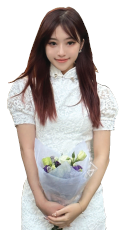
Yang Huan, a recent graduate of the Parsons School of Design, wore a qipao at her graduation ceremony.
"I would like to wear the clothes that represent me on this special occasion," Yang said. "It is indeed very meaningful to me."
Yang chose two qipao to wear to her school and college graduation ceremonies. She said she felt proud wearing traditional clothes that represented her heritage and Chinese identity.
She said her classmates told her she looked "amazing", and she was also interested in showing them traditional Chinese clothes, in the hope of piquing their interest in Chinese culture.
Yang's ancestral home is in Anhui province in East China, and she said wearing a qipao was also her way of representing her family, and especially her mother. But she said her mother would have preferred her to wear a straight qipao, which is loose at the chest and waist.
Yang chose a Hong Kong-style qipao, which has a tighter fit and contours a woman's curves.
"Perhaps in the past women in prestigious families would not show their figure excessively, and they were very conservative," Yang said.
After studying abroad in the US for almost 10 years ever since middle school, Yang said she has her instincts as a Chinese woman but also wants to embrace Western culture.
"For some of the connotations of our traditional Chinese culture, I'm a little more restrained in some ideas, but I can still embrace my own ideas," she said. "For example, what I think is beautiful, and what is right, I will go for it."
Not only did she wear the qipao, but Yang also completed her bachelor's thesis, an illustration project, on Chinese traditions.
Her thesis project, entitled Let the Brush Stroke Speak for the Memories, was a series of four illustrations that captured her childhood memories and her grandfather. The project was also filled with Chinese cultural elements, such as fish lanterns, the lion dance, blessing Fu characters, and traditional snacks. She also painted poignant moments of her grandfather, accompanied by stories.
"No matter about the qipao or my project, I think my painting style is very Chinese, I've been using my expertise to disseminate Chinese culture. It's not something I intentionally do, it's simply natural for me. That's my instinct. My instinct, guided by my heritage and identity, determines my visual language. It's what makes me who I am."
Eternal head-turner
The qipao continues to evolve and the exchange and collision with Western aesthetics and culture updated it during the 1970s.
In the late Qing Dynasty, imperialist powers invaded China and forcibly opened the gates of China. The Chinese suffered from this kind of interference, but they also took Western culture into China, which left an impact on Chinese clothing, said Zhao Lianshang, a researcher at the Chinese Academy of Social Sciences.
"We know that we must exchange with the international community, whether active or passive. We also sent Chinese international students out for interactions, bringing Chinese clothing out," he said.
"When international students go out, no matter what kind of education and artistic influence they receive, Chinese culture is the first consciousness. Qipao represents the national culture and national consciousness," Zhao said. "Only what belongs to the nation belongs to the world, so traditional clothing with Chinese culture is eye-catching, popular, and representative wherever it goes. Wearing a qipao now also represents a kind of self-cultural identity and national pride."
Chen Siyu, a recent graduate of New York University, said some women are concerned that wearing a tight qipao can be unflattering to their figures. "But qipao is very tolerant, and it can show a lot of beauty of your body and your figure," she said.
Chen has more than 30 qipao and she usually wears them in New York. She said her dresses were mostly custom-made in China using traditional crafting.
Each of her dresses would have taken around three to six months to produce, including the time it took to make the fabric, shape the qipao, attend to the length, the collar, pattern, and buckle. She has designed her own qipao after measuring her body and sending her measurements to her tailor.
"Some people sexualized qipao," Chen said, "But qipao is indeed how women pursued gender equity in the past, so they were what men were wearing, the long robe."
The reemergence of qipao in China and the US shows that women have the freedom to choose whatever they want to wear and what they think is pretty, and "women dress to please themselves", Chen said. When she wears her qipao, either walking on the street or "chilling in Central Park", she always gets praise from strangers.
"I think I'm promoting Chinese culture. New York is a cultural melting pot and has a lot of cultural tolerance, and it feels good when you are wearing clothes that belong to your ethnicity," Chen said. "There is a feeling that I'm myself. I brought my own culture to this place, and I became a landscape to the city."
Xiangjiang Vintage studio owner Guo adds as she puts on a qipao: "This looks good on me! I feel represented. Then, everyone will start to be interested in this culture, start to like it, start to want to understand and study."
Contact the writer at mingmeili@chinadailyusa.com