Trans-Himalaya region's conservation in focus









International forum welcomes representatives from across the world to discuss area's ecological efforts and sustainable development
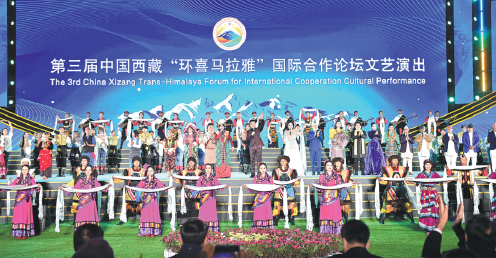
The third China Xizang Trans-Himalaya Forum for International Cooperation, a three-day event, kicked off in Nyingchi, Tibet autonomous region, on Oct 5.
Hosted by the government of the Tibet autonomous region and the Ministry of Foreign Affairs, the three-day gathering brought together representatives from more than 40 countries, regions and international organizations, including Pakistan, Afghanistan, Italy and Norway.
Themed "Promoting the Harmony of Humans and Nature, Sharing the Fruits of Cooperation and Development", the forum aimed to build international consensus on advancing ecological conservation and assist sustainable development in the trans-Himalaya region.
Wang Yi, a member of the Political Bureau of the Communist Party of China Central Committee and director of the Office of the Foreign Affairs Commission of the CPC Central Committee, said sitting at the world's highest altitude, the trans-Himalaya region boasts unique ecosystems; rich species and resources; diverse cultures and history, and enjoys broad space for cooperation.
It is a land brimming with vigor and promise. Since the forum's launch, China has been engaged in extensive and in-depth cooperation with other countries in the trans-Himalaya region. It has played an important role in bolstering economic and social development and improving the governance of the ecological environment in the region, he said.
Wang Junzheng, Party secretary of Tibet, spoke at the keynote forum on Oct 5.
He emphasized the importance of working together to develop clean energy, agriculture, digital economy and other areas. He also mentioned the idea of working together to develop the Himalayan Economic Cooperation Belt.
Luamanuvae Albert Mariner, the Samoan ambassador to China, said in an exclusive interview with China Daily that the forum brings all the region's countries together to engage in important dialogue and explore solutions to some critical challenges, not only in the region, but in the global context.
"Good neighbors are more important, more valuable than gold, and that is the essence of the forum to continue to explore areas to pursue mutual trust and cooperation on issues that are critical to the region," he said.
According to a news conference held on Thursday night regarding the forum, Tibet will take multiple measures to expand its opening-up to the outside world.
"Tibet will further relax access conditions, establish open platforms and expand exchanges and cooperation," said Yang Lahong, deputy director of the Foreign Affairs Office of Tibet.
"We will organize more high-quality and high-standard international activities such as the Forum on Development of Tibet, the China Xizang Tourism and Culture International Expo and the China Xizang Trans-Himalaya Forum for International Cooperation," said Yang.
"We will vigorously develop international sister cities, strengthen exchanges and cooperation with friendly international organizations and promote mutual learning and cooperative development between Tibet and various parts of the world," she added.
A milestone achievement of the China Xizang Trans-Himalaya Forum is that it released the Nyingchi Initiative for deepening international cooperation in the region, after a broad consensus was reached among participants.
In the initiative, China has proposed to deepen international ecological cooperation and promote harmony between humanity and nature, strengthen international development cooperation, share the outcomes of the development, promote people-to-people and cultural dialogues and exchanges, safeguard the diversity of world civilizations, maintain international peace and security and improve the global governance system.