Cave explorer discovers deep love of China









French adventurer moved to Guizhou province because of its landscape but stayed because of its people
At first glance, it is not immediately obvious what connects Jean Bottazzi to the remote caves of Southwest China's Guizhou province.
But Bottazzi is a globally recognized cave explorer and representative of the French Federation of Speleology in China, and he resides in Shuanghe Cave village in Suiyang county, Zunyi city in northern Guizhou, where he is surrounded by one of the world's most spectacular caves: the Shuanghe Cave.
The extensive network of caves spans about 430 kilometers and is still being actively explored, but the caves that have already been charted are enough to rank it as the world's third-longest cave system, according to Bottazzi.
The importance of the caves on the world stage has led to the establishment of a geopark there, and the development of innovative tourism that benefits the entire region.
For Bottazzi, "it is an art to incorporate aesthetics and poetry into a large-scale tourism development enterprise".
Bottazzi has been in Guizhou since 2007, when he left his job in France to settle there.
"I made this decision out of curiosity and passion," he says. "I wanted to test a simple idea as a speleologist: could it meet the needs and expectations and be in harmony with Guizhou society? I have traveled throughout China, but Guizhou remains my favorite land, with explorations spanning over 30 districts within this province alone."
Bottazzi's passion for cave exploration started in his youth. Born into a French family in 1962, with an older brother who was a caver, he began caving himself at 16, and soon joined the French Federation of Speleology. "I started in France, exploring caves all across the Alps," he remembers.
His journey in China began in 1986, when he participated in his first Franco-Chinese caving expedition alongside other French and Chinese speleologists and scientists.
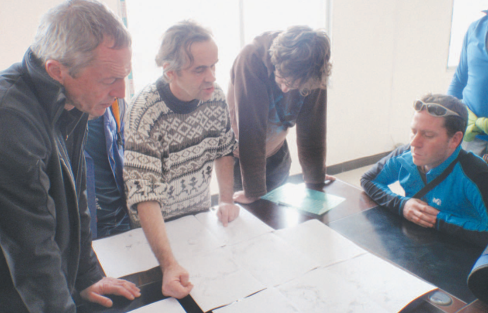
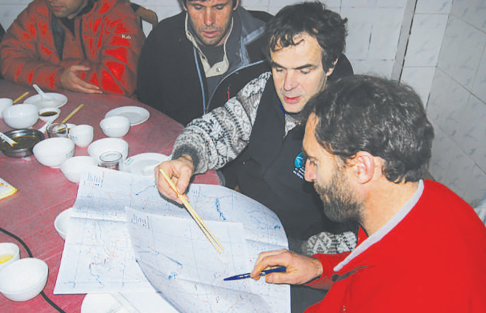
Together, they explored and conducted topographic surveys of about 40 kilometers of galleries across various regions in Guizhou province and conducted research on geology, geomorphology and hydrogeology, with a particular focus on cave sediments and groundwater.
"I stumbled upon Guizhou by chance, as it was the first province in China that I visited, known for its abundant caves," he says. "We were captivated and embarked on subsequent expeditions, which grew more frequent."
Bottazzi highlights that Guizhou's natural resources are protected and valued, particularly through the United Nations-recognized reserves and geoparks.
"It's very difficult not to be enchanted by these mountains, the beauty of the local voices, and the joy of the dances," he says. "What one discovers by visiting Guizhou and pursuing their passion is that nothing is impossible, this could be linked to a project, a story, or perhaps even a legend."
Spirit of adventure
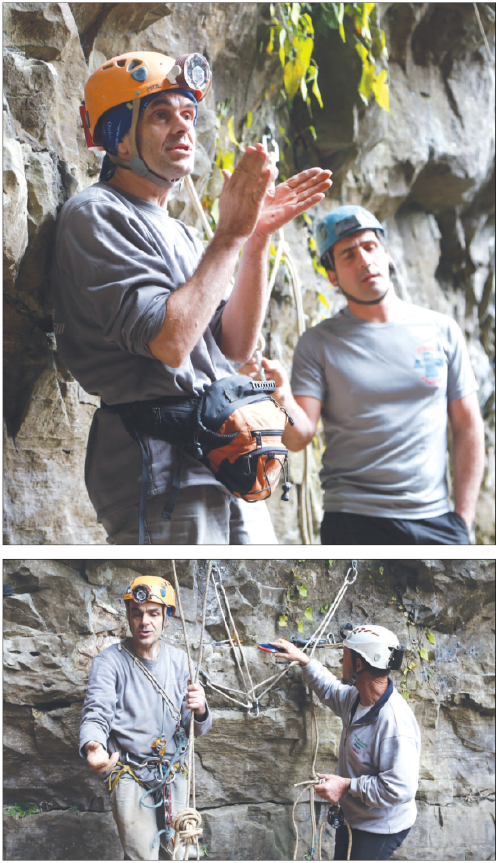
In addition to his regular scientific research in cave exploration and his involvement in establishing a geopark in Guangxi Zhuang autonomous region, Bottazzi has conducted specialized expeditions or projects that require a precise understanding of caves. He has also provided training to Chinese people in caving techniques and rescue operations.
"Firefighters encounter challenges rescuing people from seemingly impossible locations. As speleologists, we possess highly secure and rapid techniques," he explains.
While caves in Guizhou and France share similarities in their limestone geology, perpetual darkness and damp conditions, Guizhou's caves are notably larger and generally warmer.
Outside of those years most impacted by the COVID-19 pandemic, there have been at least one and sometimes several cave explorations involving cavers from the two nations each year, often in Guizhou, but sometimes in other Chinese provinces.
However, he says, there remains potential for that collaboration between France and China to be enhanced even further, with Chinese cavers so far not having participated in cave exploration in France. But Bottazzi says he thinks we could soon see Chinese cavers being trained in France, particularly in specialized techniques, such as rescue and diving.
"I enjoy complete freedom to explore caves in China, guided solely by my instincts, curiosity, rhythm and passion," he says. "There are no objectives imposed upon me. ... My experience is perhaps not transferable.
"My passion sparks interest and cultivates new friendships; all of this opens doors and takes me to places I hadn't considered visiting, and motivates me to do things I wouldn't have imagined doing. For instance, I was completely unable to make a speech to an audience before my trips to China."
Reflecting on his years in China, he says he appreciates "the freedom in my work, the trust, as well as the honesty, friendship and goodwill of the people I've encountered, and the respect that people always show me".
Bottazzi is also complimentary of Guizhou's high safety standards and the quality of transportation, accommodation, food, and healthcare he has encountered there.
"I even encourage families, including children, to visit Guizhou for their first trip," he says, noting that, this year, China has introduced a 15-day visa-free policy for travelers from 11 European countries that include France, Germany, Italy, the Netherlands, Spain and Switzerland. The scheme will last until the end of 2025.
Guizhou also offers other adventure sports and Bottazzi has Chinese friends who enjoy base jumping, canyoning, canoeing, camping, climbing, cycling, diving, paragliding, paramotoring, rafting, and more.
"The secrets of China's heart await you in Guizhou," Bottazzi says of the province that has become his beloved home.