Kung Fu Girls know how to pack a punch









Popular Gen Z kung fu group helps fuel nationwide passion for traditional martial arts, building bridges across cultures, Huang Zhiling and Peng Chao report in Chengdu.
Just as many young moviegoers in the United States aspire to be a superhero — like Superman, Iron Man or Wonder Woman — many Chinese youngsters dream of becoming wuxia, or a martial arts hero.
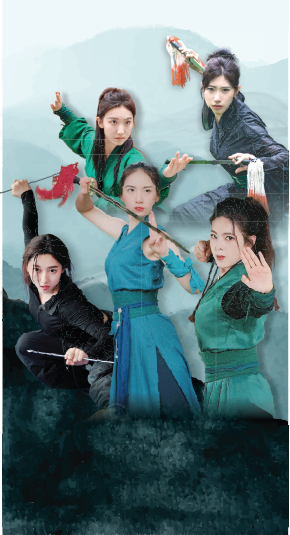
In fact, the Emei Kung Fu Girls, a group of Generation Z members, is bringing new passion to traditional Chinese martial arts, sparking a "super craze" across the country.
Gen Z refers to the generation that was born between the mid-to-late 1990s to early 2010s.
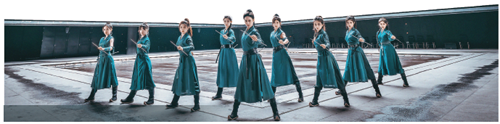
The Emei Kung Fu Girls certainly pack a punch — in a promotional video released in early May, nine of its members demonstrated the signature weapons of the Emei martial arts school, with fluid movements and fine technique.
Wang Wenbin, who was China's Foreign Ministry spokesman at that time, reposted the video on his overseas social media account and wrote: "Heroines out of Chinese Martial Arts novels! See how Emei Kung Fu Girls present stunning moves."
The video has received more than 1 billion views and is trending on various social media platforms.
"We didn't expect to receive so much attention and love right after our debut," said Mazhao Lingyun, better known as Lingyun, a core member of the group. "The compliments and encouragement are an honor and inspire us to make more progress in inheriting and promoting Emei kung fu and traditional Chinese culture."
As an inheritor of Emei kung fu, a national intangible cultural heritage, Lingyun rose to internet fame in 2020 because of a short video in which she depicts a young woman in casual clothes taking out garbage. She suddenly tosses a sword into the air and wields it with blinding swiftness in a series of Emei flourishes.
Emei, named after Emei Mountain in Southwest China's Sichuan province, is one of the three major schools of Chinese martial arts, along with Shaolin and Wudang.
Through the Emei Kung Fu Girls, which is said to be the first female martial arts intellectual property of its kind to be created in China, 26-year-old Lingyun hopes to lead more young people to appreciate traditional culture.
"We are not satisfied with simply being an ordinary idol group. Instead, we hope to make breakthroughs in cultural innovation and expression to promote and carry forward more culturally profound elements," she said.
Li Jieyu, who manages the group, said its members receive daily training on Emei Mountain from inheritors of the Emei school martial arts.
In addition to basic skills and characteristic Emei moves, they also take specialized training courses, including horseback riding, archery and performing arts to improve their performances on stage, Li said.
Chen Yufei, another group member, said the young women usually train for three hours in the morning, take a short break at noon, and continue training for another four hours.
"The training is so draining ... But once the music starts, everyone cheers themselves up and quickly gets into the training routine," she said.
Li Nuofei, another member, said she enjoys the strength and beauty that come with martial arts, despite the tough training. Perseverance and patience are key to learning the skills, which will bring more joy and a sense of achievement, she said.
Group manager Li Jieyu said its latest plan includes offering content for a Paris program in July to coincide with the Summer Olympics, with the group showcasing the unique charm of traditional Chinese kung fu on the international stage.
The group also looks forward to exchanging ideas with various international martial arts practitioners, as well as with different regional cultures around the world, to create new works in different forms, such as short plays and variety shows, she said.
"With the increase in China's overall national strength in recent years, Chinese people, especially the young people of Gen Z, are more and more confident in their own traditional culture. This has led to a revival of traditional Chinese culture and the popularity of guofeng or guochao," said Professor Cai Shangwei, director of the Culture Industry Research Center at Sichuan University.
He said the profound cultural heritage of Emei martial arts, which boasts a history of nearly 3,000 years, provides a solid foundation for the popularity of the Emei Kung Fu Girls.
Cultural vitality
Emei kung fu is featured in the works of modern martial arts fiction writers such as Li Shoumin (better known by his pen name Huanzhu Louzhu) and Jin Yong or Louis Cha Leung-yung, making Emei a highly influential martial arts school, he said.
Cai said every culture must evolve with the times and incorporate innovative elements by integrating other outstanding cultures to maintain its vitality and appeal and meet the spiritual needs of people in the new era.
By blending martial arts with other cultural elements, such as dance, music and costumes, the Emei Kung Fu Girls exhibit a strong sense of modernity and fashion. This approach allows intangible cultural heritage to enter the realm of cultural consumption and giving it sustainable vitality, he said.
Wang Chao, a national-level inheritor of Emei martial arts, said people have been flocking to Emei Mountain to study kung fu in recent years, especially after the Emei Kung Fu Girls made a name for themselves around the country.
He said the inheritors of Emei martial arts are striving to promote the cultural heritage by organizing international competitions, running training courses, holding activities in schools, and developing martial arts-themed tourism products.
The inheritors are also in talks with movie directors about making films based on the Emei school, Wang said.
"The Shaolin school earned a great reputation thanks to the kung fu movie Shaolin Temple, while Wudang benefited from The Tai-Chi Master. The Emei school also deserves a representative movie," he said.
Zou Wenxi, deputy director of Emeishan city's culture, sports and tourism bureau, said the Emei Kung Fu Girls group showcases a vibrant practice of reviving traditional culture.
"The popularity of the kung fu group has triggered young people's interest in learning about and studying Emei martial arts," he said. "In addition to enjoying the natural scenery and appreciating Buddhist culture, an increasing number of tourists have included experiencing martial arts culture in their travel plans."
Zou said the city will carry out more policies and measures to promote and support the development of Emei martial arts and the martial arts industry.
It plans to build a major Emei martial arts experience base to serve tourists visiting Emei Mountain, he said.
Strong inspiration
Wuxia is one of the most influential aspects of traditional Chinese culture and most Chinese people have grown up reading wuxia novels and watching wuxia-related movies and TV dramas. There is a saying that goes, "wherever you find Chinese, you will find Jin Yong's novels".
Jin Yong (1924-2018) is one of the most popular authors in China, having raised martial arts fiction genre to such an artistic level that readers and academics launched a petition in the 2010s for him to become a Nobel Prize candidate.
Emei Kung Fu Girls member Li Nuofei said that, under the influence of her mother, her favorite female wuxia character is Huang Rong, a protagonist in Jin Yong's novel The Legend of the Condor Heroes.
"My mother especially likes the TV drama version in which actress Barbara Yung plays the role of Huang Rong," she said. "I remember having watched it countless times with my mother since I was a child."
The portrayals of martial arts heroines, by Michelle Yeoh in Ang Lee's Oscar-winning film Crouching Tiger, Hidden Dragon and Liu Yifei in Disney's live-action movie Mulan, have also inspired Li.
"I want to follow in their footsteps to promote Chinese martial arts on the international stage, and my first small goal is to make the world aware of Emei martial arts," she said.
Fellow member Chen Yufei said she strongly admires Liu Yifei's portrayal of Hua Mulan and particularly likes the character's image.
"From her appearance to acting skills, she completely impressed me by fully demonstrating the unique charm of Oriental women," Chen said.
In Chen's mind, the Oriental martial arts heroines not only possess exceptional martial arts skills and exhibit a heroic spirit, but also love fearlessly and hate fiercely, refusing to be defined by social norms.
"Girls can also become whoever they want to be, or do whatever they like to do, regardless of gender stereotypes," she said.
Zhan Xun, a professor specializing in journalism and communication at the University of Electronic Science and Technology of China, said the Chinese Gen Z, who grew up in the era of globalization, are injecting new vitality and new meaning into Chinese cultural icons.
"China's Gen Z share more common topics and are more empathetic with their peers from around the world, which will facilitate exchanges and mutual learning between China's traditional culture and foreign cultures," she said.
Zhan said Wang Wenbin's repost of the Emei Kung Fu Girls' video received rave reviews from netizens abroad, indicating that it is a good example of cross-cultural communication.
"It provides new ideas and opens up imaginative space for promoting China's outstanding traditional culture overseas," she said.
Short-form dramas and videos, which are well-suited to new media platforms, have become increasingly popular in the era of mobile devices and small screens. They have the potential for faster dissemination and greater impact than traditional media, Zhan said.
"Meanwhile, the makeup and stage effects that are youthful, trendy, and visually appealing are ideal for cross-cultural communication," she said.
"It will be much easier to resonate with international audiences."
Contact the writer at pengchao@chinadaily.com.cn