Bitron eyes stronger China ties through energy transition









Bitron Group, one of the top suppliers of electronic and electromechanical products in Italy, is looking to contribute to China's energy transition through its innovation and technology and foster more cooperation between the two countries, the group's top executive in China said.
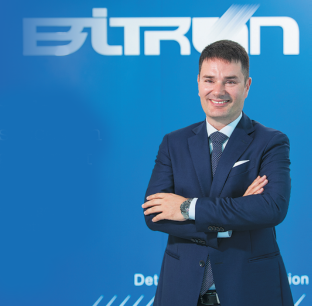
"Bitron first entered the Chinese market in the early 2000s as a producer of home appliance components and since then, we have steadily expanded and tapped into high-tech industries such as automotive and new energy vehicles," said Davide Liborio Praino, general manager of Bitron Electronic China, or BEC, one of Bitron's three subsidiaries in Qingdao, Shandong province.
"These achievements make us proud since they prove not just our dedication to innovation and technology, but our ability to meet the evolving market demands," he said.
As China goes full throttle on its energy transition with the aim of becoming carbon-neutral before 2060, Bitron is anticipating more growth as well as partnership opportunities in the country, according to Praino.
In Europe, Bitron has been working with major energy suppliers for decades. It is at the forefront of smart meter technology, providing services covering the entire metering system, including software development, production, and data collection and processing, according to the group.
With advanced functions such as various energy and power parameter measurements, self-diagnosis and encryption, Bitron's smart energy meters optimize operational reliability, data security and electrical safety, while helping users improve their energy consumption through visualized real-time data.
Its smart gas meter also integrates a range of technological innovations, including a high-precision, energy-efficient metering sensor as well as fire and earthquake detectors.
Meanwhile, Bitron has been ramping up its investments in electric vehicle charging technologies. Among them, the charging pile featuring the vehicle-to-grid, or V2G technology allows EV owners to send the power back from the batteries to the grid, especially when the electricity demand spikes.
Noting China's position as the world's largest NEV market, Praino said as the market expands, the technology will play a vital role in managing renewable energy demand, enhancing energy efficiency and balancing the energy system in the future.
According to projections from the China Association of Automobile Manufacturers, China's NEV sales are to reach 11.5 million units this year, representing a year-on-year increase of 21 percent and accounting for 37.1 percent of the total new vehicle sales.
BEC will continue to increase investments in China and explore opportunities in China's energy and NEV sectors, to further support the industrial growth and contribute to energy transformation of the country, Praino said.
In addition to green design and manufacturing, as well as products and services supporting sustainability, BEC also prioritizes energy conservation and zero emissions in its operations, he said.
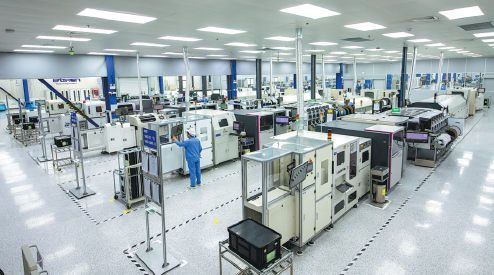
BEC's branch in Huangdao district is equipped with a ground-source heat pump system that can effectively fulfill the heating and cooling requirements of its 10,000-square-meter factory.
Also, the company installed 2,427 solar panels at its plant in Chengyang district. With a total power of 1.4 megawatts, the photovoltaic project is able to supply 17-20 percent of the electricity needed in the plant and cut more than 1,000 metric tons of carbon dioxide emissions every year.
In January, BEC obtained a certificate from the Responsible Business Alliance, one of the world's largest industry coalitions dedicated to responsible business conduct in global supply chains, after completing the RBA validated assessment program. The assessment involves self-evaluation and third-party audits related to labor, health and safety, environment, ethics, and management systems.
Bridge for cooperation
Reflecting on BEC's growth in China, Praino described it as an incredible journey, bolstered by many partners, customers and the local government.
From 2021-23, BEC recorded a combined revenue of 3.92 billion yuan ($536 million), with an average growth rate of more than 19 percent.
"Bitron has made a remarkable success in China during the past 20 years. But for us, we hope to see win-win situations all round. We believe in innovation and solutions that make everybody's life better, greener and more efficient," he said.
"So we would like to share our expertise and global resources with Chinese partners and to boost exchanges between China and Italy, as well as other European nations."
Given the different regulations and practices in Europe, Bitron can provide not only technologies but multiple services for Chinese companies eager to expand their presence in European countries, according to him.
The group has also, as an equity partner, founded the startup Ampere Transition in Milan which offers training activities, consulting and marketing services focused on energy transition.
China and Italy have seen great strides in bilateral cooperation in recent years, marked by investment and activities across numerous sectors.
In an interview with the Italian news agency ANSA in May, Jia Guide, Chinese ambassador to Italy, emphasized the positive trajectory of Sino-Italian economic relations, highlighting trade and investment as key pillars of the bilateral partnership.
Jia said the two countries' industrial structures have their own characteristics but are highly complementary in areas such as the green economy, ecological construction, technological innovation, and high-end manufacturing, indicating significant potential for collaboration.