Foreign enterprises embrace enduring appeal of Shanghai









Almost 1,000 overseas companies have headquarters based in the city
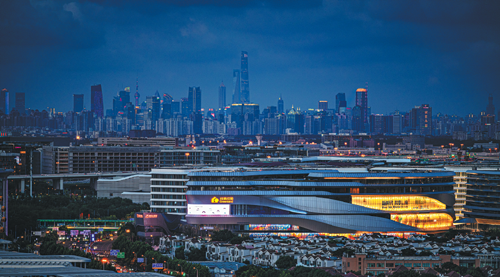
Shanghai remains a magnet for international investors in East China; it is one of the top choices for multinational corporations establishing regional headquarters in 2024, even amid global economic uncertainties.
In the first six months of the year, 29 multinational company headquarters in Shanghai were honored with recognition certificates from the city government. By June 30, the city boasted a total of 985 foreign company headquarters, according to data from the Shanghai Commission of Commerce.
In the first half of 2024, a total of 3,007 foreign investors chose Shanghai to unlock potential business opportunities, marking an 18.3 percent year-on-year increase and showcasing the city's enduring appeal as an investment destination.
Connecting businesses
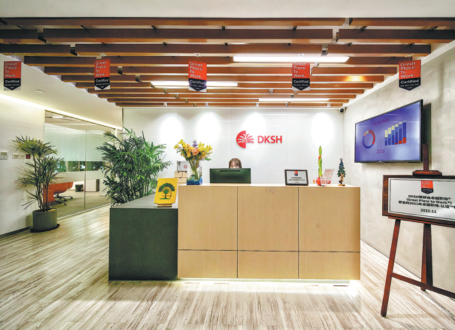
Among the 29 companies recognized by the Shanghai government is DKSH, a Swiss market expansion service provider specializing in technology, performance materials and fast-moving consumer goods.
Carole Lin, head of country management at DKSH China, said that receiving the certificate for its regional headquarters underscores the Shanghai government's appreciation for DKSH's significant contributions to the Chinese market.
"This acknowledgment not only elevates DKSH's brand standing but also solidifies its role as a pivotal market expansion services provider for businesses. Operating as a regional headquarters, DKSH is poised to intensify resource consolidation, expedite business growth, refine management strategies and bolster commercial development throughout the Asia-Pacific region and other global markets," said Lin. "The recognition will also tell our upstream clients that the Shanghai government will continue to welcome and support foreign investors. The business environment is better than previous years."
Lin added that the recognition serves to strengthen employees' sense of belonging and pride, "making them feel part of a globally influential company and thus enhancing DKSH's competitive edge in talent acquisition".
Setting up in the Pudong New Area in 1996, DKSH has been expanding its operation in Shanghai to better connect international markets to the Chinese market. In recent years, it has attached significant attention to innovation, in response to quality development trends in China. The company has upgraded its scientific instrument labs into the precision instrument demonstration center. It also added coffee and catering equipment centers, personal care labs and specialty chemical centers to its maps to provide technical support to its clients in navigating market changes and technological advancements.
"All those investments will help our overseas clients to better showcase their products to their Chinese clients," said Lin.
Over the past few years, the company achieved high double-digit growth in China.
In the future, DKSH will continue to "uphold the principle of innovation, excellence and sustainability". It will leverage its Shanghai-based regional headquarters to promote customer service enhancement, digital innovation and sustainability in China, according to Lin.
"By leveraging in-depth market analysis, supply chain engagement, marketing and after-sales services, we will continue to provide comprehensive market expansion services to help international brands succeed in China.
"With strategic guidance and resource integration from the headquarters, we can manage our supply chain and distribution network more effectively, achieving broader market coverage," said Lin. "We will use digital technology to optimize business progress and customer experiences and develop e-commerce and digital channels. We aim to improve operational efficiency and give our clients a competitive edge in a rapidly changing market."
Shanghai, where DKSH embarked on its journey in China, will continue to be a steadfast partner to support DKSH's development, according to Lin.
"Our growth in Shanghai and China has benefited from the city's favorable business conditions and continuous opening-up policies. We are optimistic about the future of Shanghai's business environment," said Lin.
Vast market
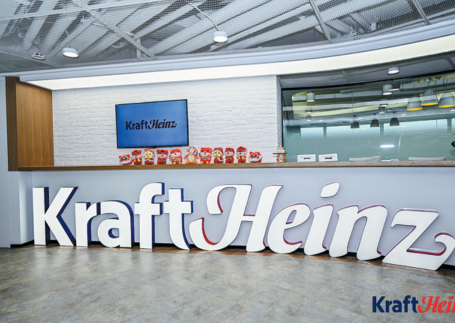
In 2020, US food manufacturer Kraft Heinz made a strategic move by relocating its headquarters from Singapore to Shanghai, aiming to capitalize on extensive market opportunities. During the certification ceremony for its new Shanghai headquarters in March this year, Frederico Freire Jardim, president of Kraft Heinz Asia, said that the relocation was intended to streamline decision-making processes and enhance marketing efficiency in China.
"In 2020, we made the decision to shift our Asian headquarters from Singapore to Shanghai. Looking at the business landscape in China, particularly in Shanghai, I believe it was a well-timed and advantageous choice," said Jardim.
In the past three years, Kraft Heinz has significantly increased its investments in Shanghai. In addition to establishing its headquarters, the company allocated 18 million yuan ($2.55 million) in 2021 toward advancing digitalization within its Shanghai factory.
Subsequently, in 2022, Kraft Heinz unveiled its state-of-the-art customer experience center in Shanghai, featuring fully equipped labs, industrial-grade kitchens and a creative workspace, aimed at accelerating its pace of innovation.
Bill Feng, chief financial officer of Kraft Heinz, highlighted three pivotal factors that attracted the company to Shanghai: a favorable business environment, Shanghai's exceptional leadership in shaping consumption trends and its abundant talent pool.
Feng said that in recent years, Shanghai has consistently implemented strategies to enhance and modernize its consumer industry through various policies and support initiatives. Notably, the city introduced the annual Double Five Shopping Festival, offering platforms for companies like Kraft Heinz to engage with targeted consumers. In the first half of 2024, Shanghai unveiled an action plan focusing on equipment renewal and consumer goods trade-ins, emphasizing environmentally friendly and sustainable practices, safe production methods, digitalization and intelligence — aligning with Kraft Heinz's own initiatives.
"Shanghai is always being regarded as one of the most open and modern international cities in China or even in the world, with a large, diversified and demanding consumer market. In Shanghai, we can better understand directly the dynamic changes in consumer needs and consumption trends, which can help us respond to the market changes in a timely manner," said Feng.
"Meanwhile, Shanghai maintains a large talent pool, which can provide us with talented global professionals. Now, in our Shanghai office, we have more than 40 percent of employees with a master's degree and above. Also, more than 40 percent of our management trainees studied or worked overseas."
In recent years, Shanghai has promoted quality development across various sectors. Kraft Heinz is committed to leveraging its expertise to contribute to the advancement of Shanghai's developmental landscape.
"We are encouraged to see that Shanghai has introduced a package of policies designed to enhance the city's attractiveness to foreign investors. In particular, the focus on industry transformation and upgrading is a positive step forward," said Feng. "We look forward to receiving further guidance on the policies regarding large-scale equipment renewal, green factories, smart factories and other related matters. We would like to collaborate with the Shanghai government to promote high-quality development."
Proven record
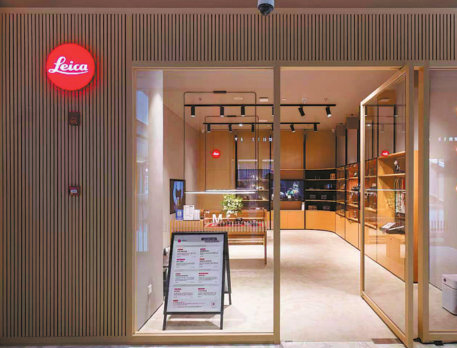
In 2016, Germany-based Leica Camera, known for its 35-millimeter film camera and lenses, settled its regional headquarters in Shanghai with the aim to connect with this market and formulate strategies that are more in line with it.
According to Siegmund Dukek, managing director of Leica Camera Greater China, there is no doubt that Shanghai, as an international business center, is the hub for the domestic market. Dukek appreciated Shanghai's premium business environment, highlighting the establishment of the free trade zone, which aids companies in enhancing operational efficiency.
"By establishing our headquarters in the city, we can better integrate resources, coordinate global business layouts and accelerate brand expansion in the Asia-Pacific region," said Dukek.
"Shanghai can provide topnotch services in various aspects such as legal, tax, finance and human resources management. For a brand like Leica targeting the high-end market, Shanghai's diverse talent pool and advanced logistics supply chain have provided strong support for our smooth operations and business expansion," said Dukek.
Over the past eight years, Leica Camera has undergone rapid expansion in China. Building on the experience in Shanghai, the company has extended its reach to second and third-tier cities, thereby bolstering its brand recognition among Chinese consumers.
Additionally, Leica has forged partnerships with prominent Chinese companies, such as smartphone maker Xiaomi, to advance the evolution of China's smartphone industry. Furthermore, collaborations with China's TV producer Hisense have been established to innovate in the development of laser TV technology.
Dukek said that one of Leica Camera's strategic focuses in China is to enhance brand awareness, especially among the younger generation. Shanghai will continue to be a pillar of Leica's development.
"We will collaborate with local businesses, artists and media to establish Leica as a cultural symbol in China and further promote the art of photography. Additionally, leveraging Shanghai's international platforms, we will strengthen the image of the brand, utilize Shanghai's exhibition resources and business opportunities to participate in more international exhibitions and forums and enhance the brand's exposure," said Dukek.
Dukek also suggested Shanghai strengthen its efforts in intellectual property rights protection and control the transportation and sale of smuggled and counterfeit products, which is particularly crucial for technology-driven enterprises like Leica. Support mechanisms on tax and innovation will also be beneficial to companies.
"We are confident in the future development of Shanghai and look forward to growing together with this city," said Dukek.
Over the past few years, Shanghai has been implementing a series of measures to bolster economic development and cultivate new high-quality productive forces. Shanghai's GDP exceeded 2.23 trillion yuan in the first half of 2024, marking a 4.8 percent year-on-year increase. The combined industrial production value of its three key industries — integrated circuits, biomedicine and artificial intelligence — experienced a 6.1 percent year-on-year increase.