China, Indonesia see friendship deepen









Home nation eager to expand cooperation to drive economic growth and deliver shared prosperity
As China and Indonesia mark 75 years of diplomatic relations this year, the two nations are deepening cooperation in key sectors such as investment, energy transition and cultural exchange, reaffirming their shared commitment to regional prosperity and stability, according to officials from both sides.
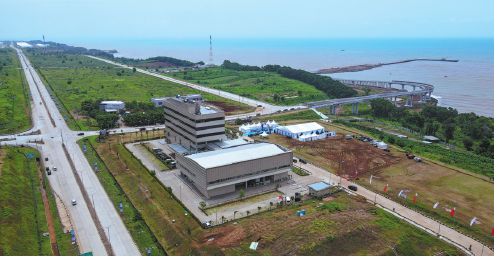
Chinese Ambassador to Indonesia Wang Lutong highlighted the recent launch of the Batang Industrial Special Economic Zone in Central Java, Indonesia, as a milestone in China-Indonesia economic cooperation.
Speaking in late March, he said that the initiative injects momentum into bilateral ties and marks a new chapter in the "Two Countries, Twin Parks" collaboration framework under the Belt and Road Initiative.
Wang emphasized that China is eager to expand cooperation with Indonesia to drive economic growth and deliver mutual benefits.
Indonesian Coordinating Minister for Economic Affairs Airlangga Hartarto described the Batang SEZ as a comprehensive economic hub integrating trade, manufacturing, logistics, commercial activities, residential areas and tourism.
He expressed confidence that the growing synergy between Indonesia and China will strengthen strategic industries and attract increased investment.
Ngurah Wirawan, head of the Batang SEZ development and management agency, underscored the zone's competitive advantages, including a range of fiscal incentives, infrastructure support and streamlined investment procedures.
These measures, he said, significantly enhance Batang's appeal to both domestic and international investors. Wirawan projected that the zone will attract an additional IDR 75 trillion ($4.5 billion) in investment over the next five years, creating more than 50,000 new jobs.
Spanning 4,300 hectares, the Batang SEZ — also known as the Batang Integrated Industrial Area — features three core clusters. These are industrial and processing, logistics and transportation, and tourism and real estate, making the zone one of the most comprehensive SEZs in Indonesia.
Currently, the zone hosts 27 enterprises, including seven operational factories, seven under construction and 13 in the planning phase. According to official SEZ documents, the investments span a diverse range of industries, including solar panels, glass, wood pellets, footwear, polyvinyl chloride, grinding balls, ceramics, industrial gases and medical equipment. Among the more than 7,000 workers employed at the SEZ, 80 percent are from Batang Regency.
To date, the Batang SEZ has attracted a total investment of some IDR 17.95 trillion, solidifying its role as a key driver of Indonesia's industrial and economic development.
Energy collaboration
China and Indonesia are also making strides in energy collaboration, particularly in clean energy and green development.
At the COP29 United Nations Climate Change Conference in Baku, Azerbaijan, in November, Liu Zhenmin, China's special envoy for climate change, noted that both China and Indonesia face shared challenges in the energy transition. He highlighted the immense potential for green development through joint efforts.
Paul Butarbutar, head of the Just Energy Transition Partnership Indonesia Secretariat, underscored the importance of international collaboration in accelerating the green energy transition.
He noted that Indonesia and China have demonstrated potential in low-carbon development and renewable energy initiatives. In line with this, the Indonesian government is formulating policies to promote clean energy technologies, such as solar photovoltaics, to drive more sustainable economic growth.
As part of the transition, Chinese enterprises are playing a pivotal role in enhancing Indonesia's industrial capacity through technological innovation. Their contributions, particularly in green energy and advanced smelting technologies, are not only supporting Indonesia's shift to cleaner energy but also creating significant employment opportunities.
On Jan 6, Power Construction Corporation of China, also known as PowerChina, signed an engineering, procurement, construction, operation and maintenance contract with KapitalAsia for a green coal transportation corridor project in Central Kalimantan, Indonesia.
The project involves upgrading and maintaining coal transport roads, transporting coal on fully electric heavy-duty trucks and constructing photovoltaic power stations with energy storage facilities.
"We will leverage our expertise in the new energy sector to collaborate with our Indonesian partners in advancing the green energy transition and setting a benchmark for sustainable development," said Chen Guanfu, chairman of PowerChina International Group. He emphasized PowerChina's expertise in energy and infrastructure development, ensuring the project's success and mutual benefits.
Dexin Steel Indonesia, backed by Chinese steelmaker Delong Holdings, is another example of China-Indonesia corporate cooperation. As one of the largest integrated steel enterprises in Southeast Asia, the company has an annual steel production capacity of 7 million metric tons and a coking project of 4.1 million tons.
Delong has invested about $3.4 billion in Dexin Steel, enhancing Indonesia's steel production capabilities while introducing cutting-edge green smelting technologies. This investment has created 1,800 skilled jobs and employed 4,000 local workers, contributing to the region's economic growth and promoting the standardization of Indonesia's steel industry.
Shenzhen-based GEM, a leader in the circular economy, has been investing in Indonesia since 2018. The company focuses on developing a comprehensive industry chain for battery recycling, raw material regeneration, ternary material remanufacturing and battery pack remanufacturing.
GEM has processed more than 5 million tons of waste batteries, electronic waste and scrapped vehicles, establishing itself as the world's largest nickel-cobalt battery material remanufacturing base.
"Our world-class smart green nickel resource lighthouse factory has increased the utilization rate of Indonesia's laterite nickel ore from 60 percent to 100 percent, reducing carbon emissions by more than 90 percent," said Zhang Wei, deputy general manager of GEM.
Cultural exchange
Beyond economic and energy cooperation, China and Indonesia have been expanding their bilateral ties in the cultural realm. As the two countries celebrate the 75th anniversary of diplomatic relations, both sides are committed to fostering stronger ties in education, tourism and culture to enhance mutual understanding and friendship.
According to a joint statement issued in November, China and Indonesia will strengthen cooperation in scholarship programs and student exchanges, particularly in Mandarin and Indonesian languages, digital learning, and vocational education.
The two countries also plan to deepen exchanges between universities and think tanks, promoting faculty and student exchange programs to aid cultural communication.
Zhang Zhisheng, Chinese consul general in Denpasar, recently highlighted the growing relationship between Chinese provinces and Indonesia's Bali, West Nusa Tenggara and East Nusa Tenggara provinces.
In a local news article, he said official and people-to-people exchanges have intensified, with a surge in Chinese tourist arrivals and a growing interest among Indonesian youth in learning Mandarin. Jiangxi province in China and Bali province in Indonesia have established a sister-province relationship to strengthen ties.
wangjinhui@chinadaily.com.cn