Great support for Wall in Gansu









National structure is more than ancient relic to dedicated team which looks after it every day, Wang Qian and Ma Jingna report.
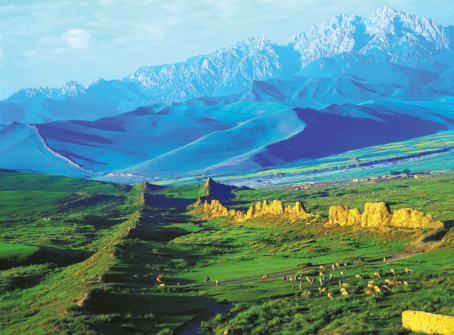
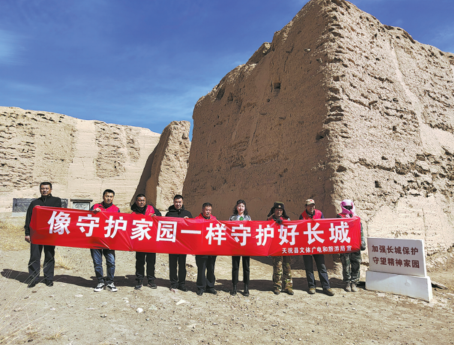
In the rugged mountains of the Tianzhu Tibetan autonomous county in Gansu province, where the Great Wall snakes across the peaks, 68-year-old Wang Xilin has spent more than three decades on patrol, helping ensure the architectural wonder's preservation for future generations.
"During the past 30 years, I've heard only my footsteps and the howling wind while walking in the wild mountains. At first, I was lonely, but each mound of earth has become an old friend," Wang says, adding that he feels it is his family duty to guard the structure for generations to come.
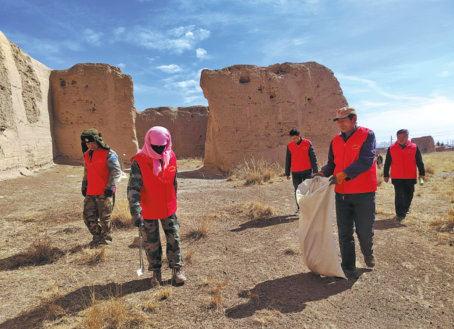
After retiring last year, he handed over responsibilities to his daughter-in-law, ensuring that this family commitment to the wall endures. Now, he visits three times a week and does what he can, picking up waste and reporting hazards.
Although the job is lonely and doesn't pay well, a dedicated team of 39 grassroots protectors in the county work tirelessly, and receive about 2,000 yuan ($275.61) a year for their efforts.
For Wen Zhanlian, director of the Great Wall protection station in Tianzhu, the environment that conservationists work in is challenging, with inconvenient transportation and many sites located at altitudes of over 3,000 meters.
"In such conditions, it is their love and passion for the Great Wall that helps them carry on," she says.
Within the county, Great Wall sites consist of sections built in the Han (206 BC-AD 220) and Ming (1368-1644) dynasties. The 79 existing segments are composed of walls, trenches, passes, fortresses, and stand-alone structures, according to the county government.
They are more than just ancient structures; they are a testament to the resilience and spirit of the people and as Zhang Yongtang, director of Tianzhu's cultural and tourism bureau, says, the Wall's cultural value extends far beyond its physical form.
"It is a symbol of our history, our identity and our connection to the past," he says. "By protecting it, we honor the sacrifices of those who came before us, and inspire future generations to cherish their heritage."
Listed as a UNESCO World Heritage Site in 1987, the Great Wall was built over the course of 2,000 years, with construction continuing from the Spring and Autumn Period (770-476 BC) to the Ming Dynasty. Existing sections add up to a total length of more than 21,196 kilometers, and pass through 15 provinces, administrative regions and municipalities, according to the National Cultural Heritage Administration.
That symbolism has encouraged Wang to remain steadfast in his mission, which began in 1991, when he was appointed as protector after a devastating earthquake in October 1990 forced many to seek refuge near the ancient structure.
The disciplined veteran took on the mission without hesitation. Over the years, he walked the sections twice a day through wind, rain and snow, each patrol lasting around two hours. The vast, empty landscape was his companion, and the sound of his footsteps echoed against ancient stones.
Besides nature, the wall had been severely threatened by human activities, such as sand and stone mining. People nearby have even taken its bricks to use in buildings.
"In the past, people had a poor sense of protection, leading to human damage, such as illegal digging and the theft of sand and soil to build houses," Wang says.
One of his most vivid memories is the day he confronted a group of sand thieves. They had come to dig in a moat near the wall, a destructive act that threatened the wall's stability. Wang climbed onto their truck and refused to let them leave.
"I told them either they return the sand and fix the moat or they would have to drive over me," Wang says. In the end, they restored the moat as he demanded.
Things began to change after Great Wall Protection Regulations came into effect in 2006 as more people, both government and grassroots, began to participate in preservation.
"Natural environmental erosion is the biggest challenge. The earthen walls are very vulnerable to erosion by rain and snow, and with constant strong winds, the issue of weathering is severe. However, the good news is that with increased publicity, people's awareness has risen, and human damage has significantly decreased," Wang says.
In recent years, Tianzhu has invested 13.28 million yuan in protection, including the restoration of 4,700 meters of wall, and the installation of advanced monitoring systems, according to the county's cultural and tourism bureau.
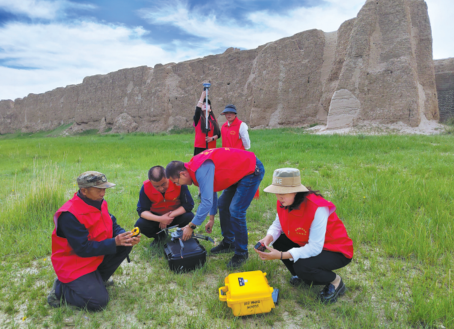
Zhang says that along fragile sections, 11,540 meters of steel protective fencing have been erected to prevent human damage. In 2023, a 2.68 million yuan digital security project was launched to equip 14 sections in the county (21,675 meters) with infrared surveillance and crack monitoring sensors.
Modern technology like drones and remote sensing technology have also been used to monitor the wall.
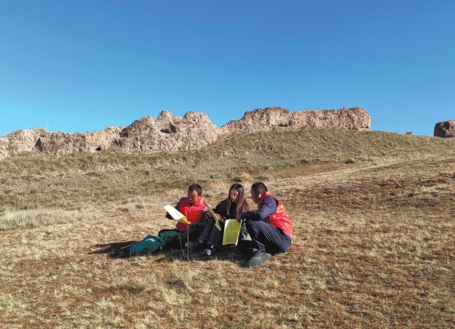
Even with all these efforts, protection is still not easy for the 39 villagers on Wen's team, who patrol the most remote and treacherous sections of the wall. To combat the altitude and difficult terrain, they rely on their motorcycles and worn-out boots to navigate rugged paths. Every week, they inspect the wall, documenting any changes or damage, ensuring that signs and barriers remain intact.
Despite these hardships, they are not only guardians but also educators, spreading awareness of the importance of cultural heritage among local communities.
"This place should receive better protection. There are many visitors from Beijing and other provinces, and everyone says that such a precious historical site should be an official scenic area. This would encourage more people to learn about the Great Wall, while also ensuring it is better protected," Wang says.
For the guardians in Tianzhu, the section they patrol is more than a relic of the past — it is a living, breathing part of their lives.
"As long as we are here, we will guard this wall. It is our duty, our pride and our legacy," Wang often tells his family.
Contact the writers at wangqian@chinadaily.com.cn