Province fosters public appetite for books









Fourth Shanxi Conference for Promoting Reading among All Residents held in Taiyuan and complemented by events to spur literature study
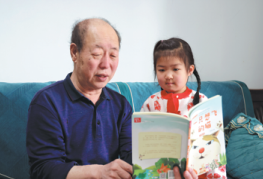
Promoting the habit of reading can enhance the spiritual well-being of the people and help develop a strong cultural province, officials said at the opening ceremony of the fourth Shanxi Conference for Promoting Reading among All Residents, which was held on Wednesday in the provincial capital of Taiyuan.
On the sidelines of the three-day event, a range of activities, including exchanges among readers, recitals of poems and classics, as well as forums and seminars, were held throughout the North China province.
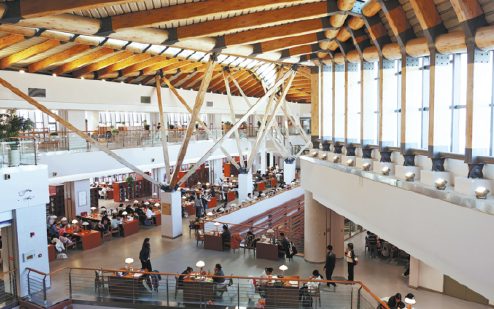
The conference announced that Shanxi has established a comprehensive service system for readers that includes libraries, bookstores and readers associations. Their presence covers every part of the province and their operations cater to various age groups.
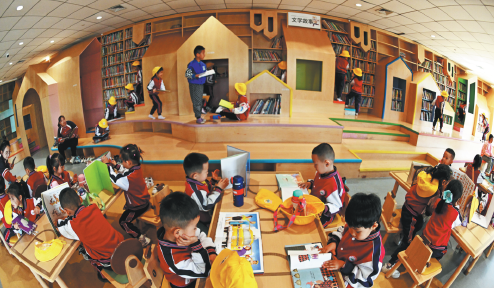
Shanxi Library in Taiyuan, for instance, has a section dedicated to young readers ranging from kindergarten to middle school students. The section has a collection of about 500,000 books and 400 seats for readers, making it one of the largest of its kind in all provincial-level regions of China. The section has classified its collections according to not only subjects, but the ages of readers.
For younger children, the reading room is decorated with colors and furniture that can easily draw their interest. There are also dedicated teachers to guide their reading.
Through the use of digital technologies, the section also features an online library system, allowing readers throughout the province to access its resources.
Another library in the provincial capital, Taiyuan Library has established a workshop on Marxism, catering to readers interested in such academic studies. The workshop has 22,000 copies of books, including classics in various languages and research works on Marxism.
In addition to offering a venue for reading, the workshop has held activities to aid academic exchanges among readers.
In cooperation with grassroots public institutions, Taiyuan Library has established more than 50 Marxism workshops in communities throughout the city of Taiyuan, arousing public interest in such studies.
The business community is also devoting efforts to promoting reading among employees and neighborhood residents.
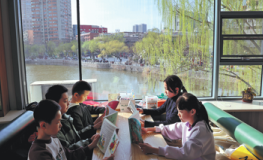
The Riverside Readers Society is a readers' club established by the Shanxi Equity Exchange Center. It aims to enhance the academic level of its employees and nearby residents by holding reading activities.
For employees of the center, the society calls for 15 minutes of reading every day, holds an exchange meeting every week and hosts a symposium every season.
As a result of extensive and intensive readings and frequent exchanges, members of the society said that some complicated theories in economics, especially in equity transaction, have become easy to understand.
Students constitute a major force in the reading community of Shanxi. To engage more students in reading, schools in the province have forged collaborations with multiple stakeholders of society to create scenarios where students can read.
Taiyuan No 4 Primary School, for instance, has cooperated with the Shanxi Museum of Archaeology, to help students access the museum's books and documents, and spark their interest in archaeology.
While suggested to leave 30 minute for reading every day, the students have opportunities to attend seminars hosted by the museum, experience relics repair and even visit some archaeological excavation sites.
In Heshun county, students in primary and middle schools are encouraged to integrate their reading experience with field research.
The study of farming is part of the curriculum of many schools in Heshun. On weekends, the schools arrange research tours of neighboring farms and ranches.
One of such tours was recently organized by several local schools in cooperation with Shanxi Agricultural University.
Presiding over the tour of a forage grass farm, Zhao Xiang, head of the College of Grassland Science of SAU, taught students to recognize various varieties of grass and related farming knowledge.
He told students that reading should be integrated with practice, and this was especially true in ancient Shanxi, which is known for its millennia-old farming culture.
"In Shanxi, as well as the rest of the China, we have an old saying that 'farming and reading are crucial to sustain a family's fortune and prosperity'," Zhao said. "And we noticed that, in ancient times, the intellectuals always had an aspiration to be'a scholar, a farmer, a fisherman and a woodman' all at the same time."
"The phenomenon shows that integrating study with practice has long been highlighted by ancient intellectuals and this integration is of even greater significance in today's society where developments of all sectors are powered by knowledge," he added.
Zhao is leading a team of researchers and students from his university to work in this county. While trying to cultivate new crop varieties and develop new techniques and technologies for farming, the team's other major mission is to train local farmers.
The training includes tutoring on-site and distributing books to farmers to help them master more farming skills.
Li Yao, Wang Ningna and Li Keying contributed to this story.